

Inside Wellington’s Tip Shop: A Real-World Model for Reuse and Resource Recovery.
Across Aotearoa, conversations about waste are increasingly shifting from disposal to recovery, keeping materials in use for as long as possible rather than sending them to landfill.
One place where this happens every day is Wellington’s Tip Shop at the Southern Landfill, a facility that diverts reusable goods and gives them a second life in the community.
Earlier this year, Nonstop Solutions COO Sophie visited the site and met Tip Shop and Recycling Facility Manager Shelali to learn more about how it works behind the scenes.

Shelali and some of the recycling centre team at Wellington’s Southern Landfill
From Waste Management to Community Resource
Shelali’s path into the role reflects a growing global focus on waste minimisation.
“I did my Masters in Urban Planning and Waste Management in Sydney. When I came back home, I worked managing electrical waste and then had the opportunity to move to New Zealand. I wanted to continue in waste management and diversion because it allows me to connect with the local community and work with people who share the same vision.”
She has now managed the facility for the past three years.
How the Recycling Centre and Tip Shop Work Together
The Southern Landfill site includes both a recycling centre and the Tip Shop itself.
Residents can drop off domestic recycling like cardboard, glass, cans and plastics, all free of charge. Alongside this, reusable items are intercepted before they reach landfill.
“There are two sides of it. The recycling centre and the tip shop,” Shelali explains. “People can drive in, drop their recycling here and leave.”
Under the Tip Shop umbrella are shop staff, transfer station staff and an online sales team.
Over its 25-year history, the shop has handled an extraordinary range of goods recovered from landfill or donated by the public. From furniture and appliances to building materials and household items.
“Everything you see in your house, you can come in and donate to us for free! including electrical and electronic items.”
Electrical goods are now tested and tagged before resale, extending their safe lifespan.

Wellington’s Tip Shop

Diverting Items Before Disposal
Recovery begins before waste even reaches the landfill face.
“I have a staff member based at the transfer station who diverts things from the truck, engages with customers, and makes sure there is someone at the last barrier going, don’t put that in the landfill.”
On the morning of Sophie’s visit, approximately one tonne of reusable material had already been diverted, including a large quantity of paint.
The team also collects specialised materials such as metal lids, plastic bottle caps, bread tags and silicone for dedicated recycling streams.
Recycling Challenges and Opportunities
Different materials present different challenges.
Glass and cardboard generally have low contamination rates and can move through established recycling systems efficiently. Plastics, however, remain more difficult due to sorting requirements and public confusion about what can be recycled.
Daily site checks are carried out to remove contamination and improve outcomes.
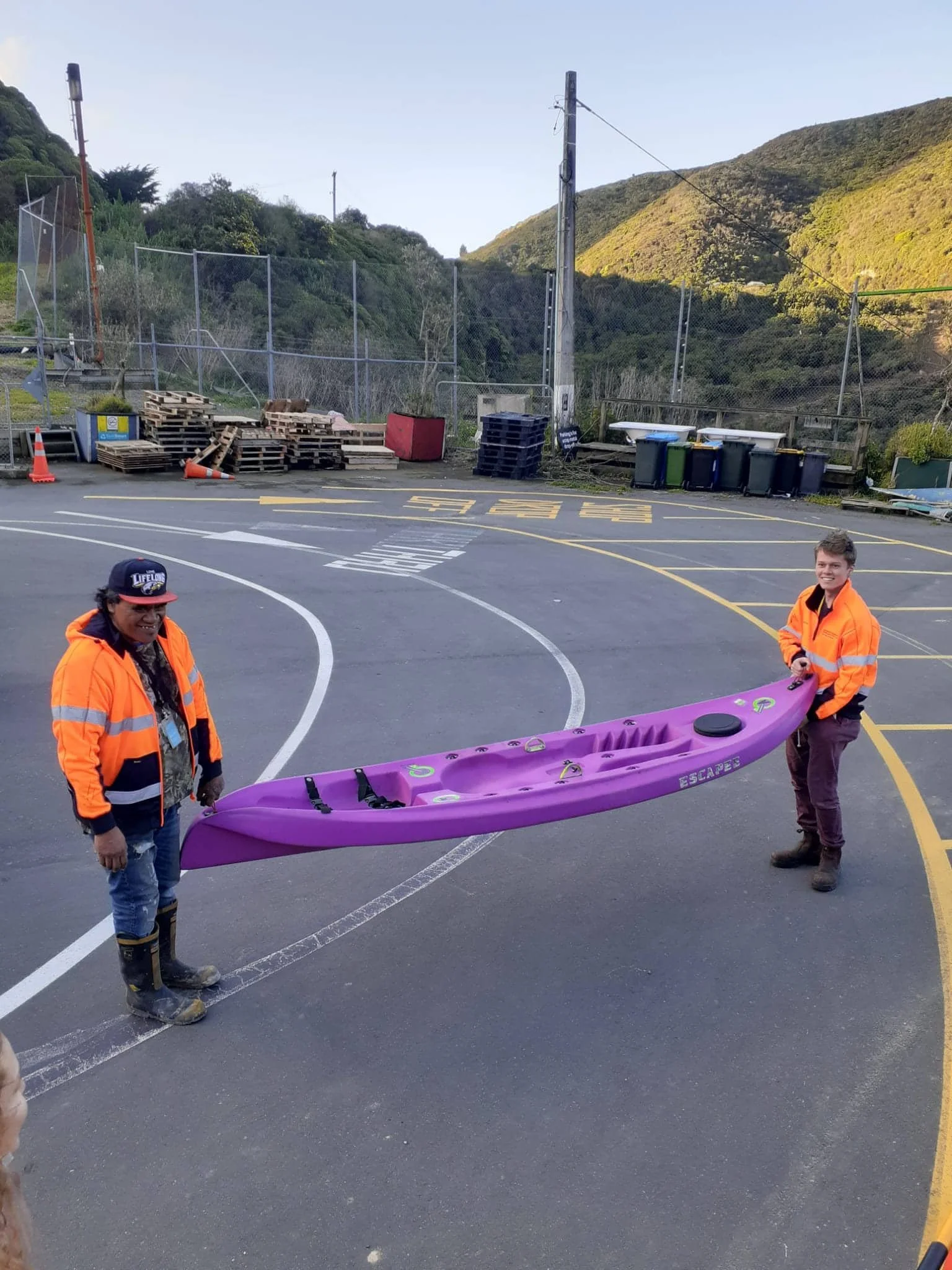
A kayak ready to be rehomed!
Beyond Resale: Community Impact
Recovered items don’t just reduce landfill, they support the wider community.
The Tip Shop regularly collaborates with schools, charities and social organisations. Materials are used for art projects, home setups for refugee families, and community initiatives such as neighbourhood clean-ups.
In one example, nearly 800 kg of reusable items collected during a community spring clean were redistributed rather than discarded.
Shelali emphasises that the facility also functions as a social space.
“People will stand around talking for hours. Some visit three times in a day, they may not buy anything, but it gives them a sense of belonging.”
What This Means for Events and Venues
Large events and facilities generate many of the same materials seen at recovery centres, temporary infrastructure, packaging, signage, furniture and equipment.
Without planning, these materials often go straight to landfill after use.
Facilities like the Tip Shop demonstrate that viable alternatives exist when recovery pathways are built into systems from the start.
Key lessons for organisers include:
Plan for reuse before procurement
Separate reusable items during pack-down
Identify local recovery partners early
Consider community redistribution options
Looking Ahead
Wellington City Council is exploring expanded resource recovery networks, including large-scale diversion of organic material and construction waste, as well as potential education facilities focused on circular economy practices.
Shelali sees collaboration as essential:
“Our vision is to be leaders for a waste-free future… working collectively with like-minded organisations.”
A Shift Toward Resource Management
The Tip Shop illustrates a broader transition occurring across Aotearoa, from treating waste as something to dispose of, to recognising materials as resources with ongoing value.
For organisations managing large volumes of materials, integrating reuse and recovery into operations can significantly reduce environmental impact while supporting local communities.
Want to Improve Recovery at Your Event or Facility?
Every site produces different materials and challenges. Identifying reuse pathways early can dramatically improve outcomes and reduce landfill.
👉 Book a consultation with Nonstop Solutions to explore practical waste minimisation strategies tailored to your organisation.
You can find The Tip Shop at the Southern Landfill - located at the end of Landfill Road, off Happy Valley Road between Brooklyn and Owhiro Bay in Wellington. The Tip Shop and Recycle Centre is on the right hand side of the road, with the turn off just before the landfill weigh bridge.