


Across Aotearoa, second-hand shopping has become a go-to way to reduce waste and save money. Dropping a bag of unwanted clothes at the local op shop often feels like a responsible, feel-good solution. Items stay in circulation, charities benefit, and nothing goes to landfill.
But the reality is more complicated.
In Wellington, textile waste has been rising for years, with clothing making up an increasing portion of material sent to landfill. At the same time, charity shops are receiving far more donations than they can realistically sell.
So where do all those clothes actually end up?
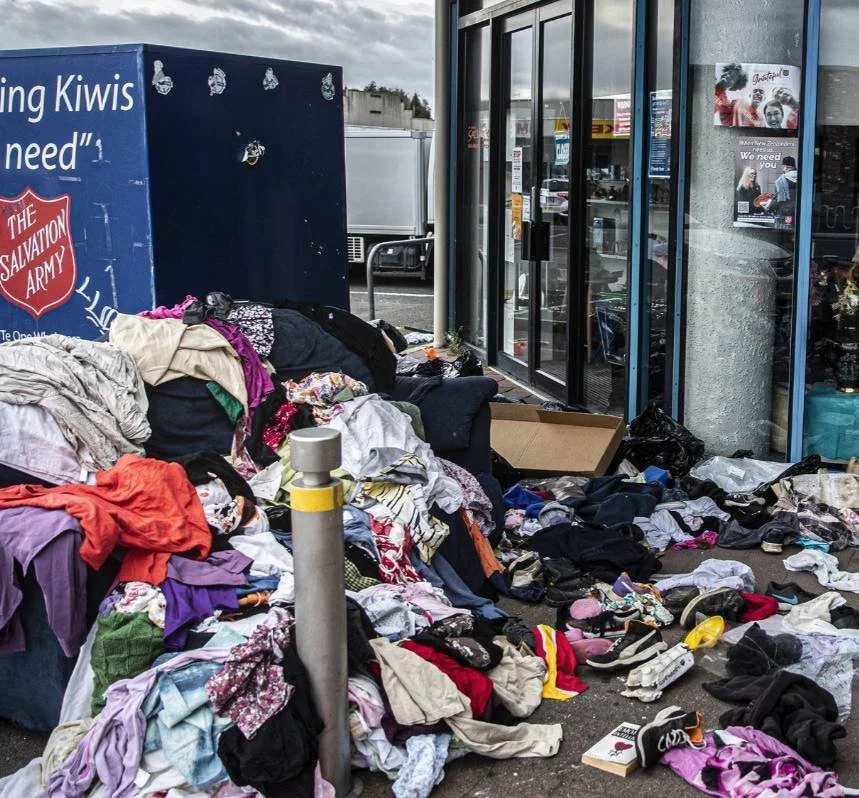
The Scale of the Fast Fashion Problem
New Zealanders are buying significantly more clothing than previous generations. Fast fashion has shortened product lifespans, meaning items are often worn only a handful of times before being discarded.
This surge in consumption has created a parallel surge in textile waste, a problem that donation systems alone cannot solve.
While second-hand shopping is far more sustainable than buying new, the volume of unwanted clothing entering the system has outpaced demand.
What Happens After You Donate?
Many charity shops report that only a small proportion of donated items are suitable for resale. Factors include condition, style, seasonal relevance and sheer volume.
Unsellable items may be:
Passed to community groups
Used as cleaning rags or industrial textiles
Exported for recycling
Ultimately sent to landfill
Disposal costs can be significant, meaning charities sometimes pay to deal with items they never asked for.
Volunteers and staff also face the difficult task of sorting through damaged, dirty or unusable goods.
Why This Matters Beyond Households
Textile waste isn’t just a household issue. Events, workplaces and institutions generate large volumes of clothing and fabric materials through:
Staff uniforms
Promotional merchandise
Lost property
Costumes and production materials
One-off branded apparel
Without planning, these items often follow the same pathway as household donations, with limited capacity for reuse.
The Real Issue: Overconsumption
Donation systems were designed to redistribute usable goods, not absorb unlimited quantities of short-lived products.
Reducing unnecessary purchases in the first place remains the most effective way to reduce textile waste.
For organisations, this can mean:
Ordering durable items designed for repeated use
Avoiding single-event apparel where possible
Choosing timeless designs over trend-driven ones
Considering rental or sharing models
How to Donate Responsibly
When donating clothing or textiles, quality matters far more than quantity.
Useful guidelines include:
Only donate items in good, usable condition
Clean, intact items with plenty of wear left are far more likely to be resold.
Check what organisations actually need
Many shops periodically pause donations due to storage limits.
Support causes you believe in
Donating to organisations aligned with your values ensures items contribute to meaningful outcomes.
Consider alternative pathways
Clothes swaps, direct donations to people who need them, repair, repurposing or textile recycling programs may be more appropriate.
A Local Perspective
In tight-knit communities like Wellington, the impact of over-donation is particularly visible. Charity shops, community groups and volunteers are often working behind the scenes to manage volumes that far exceed expectations.
Responsible donating helps these organisations focus on their core mission rather than disposal.
Moving Toward Better Systems
Ultimately, textiles highlight a broader truth about waste: there is no single “magic bin” that makes unwanted materials disappear.
Effective solutions require upstream thinking. From purchasing decisions to reuse planning and end-of-life pathways.
For events and organisations, this means considering what will happen to materials long after the event finishes or the campaign ends.
👉 Book a consultation with Nonstop Solutions to explore practical waste minimisation strategies tailored to your organisation.
Sources:
'NZ Landfills are becoming full of unloved clothes as fast fashion grows' - NZ Stuff Report 2019
‘Charities spending thousands to dump unsellable donations' - Radio New Zealand 2019
'Charities spending millions cleaning up fast fashion graveyard' - ABC 2018
'The not so sustainable truth behind op-shopping' - Sauce Mag